
With the holidays approaching and calendars beginning to clear, the question returns of where it is possible to work while staying away from the office. The answers tend to fall under three labels, often used interchangeably: workation, whether individual or team-based, work retreat, and the fourth place.
A workation is a period spent working from a location chosen for the quality of the stay, while retaining the full operational capability of an office. In Italy, the term has circulated mainly in its individual form, where it responds to a personal desire. The corporate version is different in nature: the group travels together, the company pays, and in the end someone asks what was actually produced. This format is called a work retreat and is designed around an outcome defined from the outset.
The type of place required also changes. A one-day offsite needs a spacious meeting room. A week of work requires a fourth place: an inhabited territory where living, working and belonging come back together for an extended period. This is the category defined by Limitless Workspace, and it finds a concrete expression in the AHOMA houses in Monferrato.
In summary
- Individual workation responds to a personal desire. Team workation responds to an organizational need and is designed around an outcome defined from the outset.
- Four situations justify it: writing a strategy, realigning the team after a change, running an innovation sprint, and integrating a distributed team.
- The location should be assessed through eight questions before looking at the photographs. The rhythm of the day matters just as much as the place itself.
Corporate workation: why it works
A study published in Nature Human Behaviour involving more than 61,000 Microsoft employees found that fully remote work makes collaboration networks more static and more siloed; the MIT Senseable City Lab has also documented the loss of weak ties. A team workation concentrates into a few days the proximity that a distributed organization does not generate during the rest of the year. With one caveat: a poorly designed week costs money without delivering value.
The four situations that justify it
- Developing a strategy. Some activities suffer when interrupted. A shared work period of several consecutive days can help bring them to completion.
- Realigning after a change. A merger, a new organizational structure, or a newly appointed senior leader.
- An innovation sprint. An open problem, a diverse group, no interruptions.
- Integrating a distributed team. Those who know each other only through video calls have an incomplete picture of who does what.
The fourth place: how to choose where to go
The fourth place stems from the third place, the category Ray Oldenburg used in 1989 to describe informal spaces between home and the office. Distributed work has eroded those boundaries and made an additional category necessary, explored in Limitless Workspace’s analysis of the fourth place. This results in a framework of eight questions to use before looking at photographs of a venue.
- Spirit. Does it help clarify visions and priorities?
- Mind. Silence, separate spaces, a door that can be closed.
- Body. Can light, sleep, movement and food sustain several intense days?
- Relationships. Spaces for voluntary conversations, beyond the meeting room.
- Territory. Does it create a real connection with local people and activities?
- Design. Do the materials and spaces work well for an entire week?
- Work readiness. Reliable connectivity, ergonomics, acoustics.
- Autonomy over time. Can people manage their own pace?
The seventh criterion rules out more venues than any other. The AHOMA houses meet all eight: offices during working hours, residences for the rest of the day, just one hour from Milan.
A typical day
Morning. Those who wake up early find the house quiet: this is the writing window, the time to tackle the difficult part. Then comes a long breakfast and two and a half hours of collective work on a goal set the night before, the most intensive block of the day.
Lunch and early afternoon. Lunch outdoors, an hour and a half: it may seem indulgent, but it is actually the moment when the morning’s discussions have time to settle. Then comes individual or paired work, because attention naturally declines and this part of the day is better suited to reviews and checks.
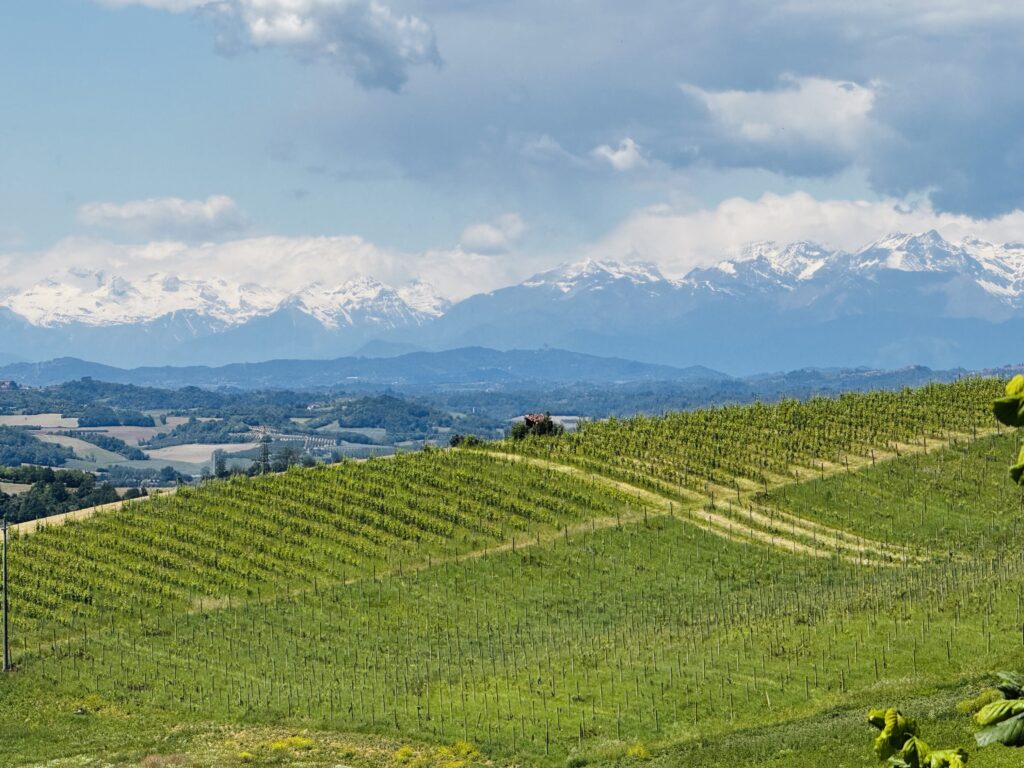
Mid-afternoon. The outdoor activity: a walk through the vineyards, a bike ride, a winery visit, or an artisan workshop. It serves as recovery and as work, because conversations that happen while walking have a quality of their own.
Evening. Ten minutes to review what the day has produced and define the goal for the next day, then dinner with no agenda and a free evening: a fourth place is also defined by the freedom it gives people to stop working.
Over a full week, it is worth including a free day, usually the fourth. Team building works best when it grows out of the local area rather than from a catalogue: a grape harvest, cooking together, or an artisan workshop.
What to measure after returning
Was the document produced? Are the decisions made still in place after sixty days? And how many people in the group did each person contact in the thirty days that followed, compared with the previous thirty days? The last question comes closest to what a fourth place is meant to produce.
Frequently Asked Questions
What is the fourth place?
It is an inhabited territory where living, working and belonging come back together over an extended period. It stems from Ray Oldenburg’s third place, the informal public spaces between home and the office, and from the recognition that distributed work has made those boundaries more porous. The full discussion can be found in Limitless Workspace’s definition of the fourth place.
What is the difference between a workation and a work retreat?
Workation describes the mode: working from a place chosen for the quality of the stay. Work retreat describes the team format: a defined group, a limited period, and a stated outcome. A well-designed corporate workation is a work retreat.
How long should it last?
From three to seven days, depending on the objective. With fewer than three days, the group spends too much of the time arriving and leaving. Beyond seven days, the cost of people’s time grows faster than the benefit.
Does it replace the office?
No. It comes into play when home, the office, and flexible workspaces do not provide the right setup. For the rest of the year, day-to-day work needs proximity and continuity, which is exactly what our business centers in Milan and Venice provide.
How do you convince management?
By comparing the cost of the workation with the cost of the alternative: the weeks of meetings needed to produce the same document, or the cost of a delayed decision. One useful point when preparing the budget: the biggest cost is people’s time, not the stay.