
In summary
- A professional podcast room ensures consistent audio and video quality from one episode to the next, something that is difficult to achieve with home equipment.
- The hidden cost of DIY recording is the time spent in post-production correcting noise, reverb and inconsistent lighting—when these issues can be fully corrected at all.
- A well-designed podcast room often also supports video production, webinars and photo shoots, which is why it is also referred to as a media room.
- According to the Ipsos Digital Audio Survey 2024, there were 15.2 million podcast listeners in Italy, up 2% compared with 2023, and 63% had listened to at least one branded podcast.
Those who regularly produce audio and video content, either independently or for a company, achieve more consistent results and reduce post-production time by recording in a professional podcast room rather than in a home environment. The difference can be seen in sound quality, image quality when video is involved, and the time saved during editing.
What is a professional podcast room
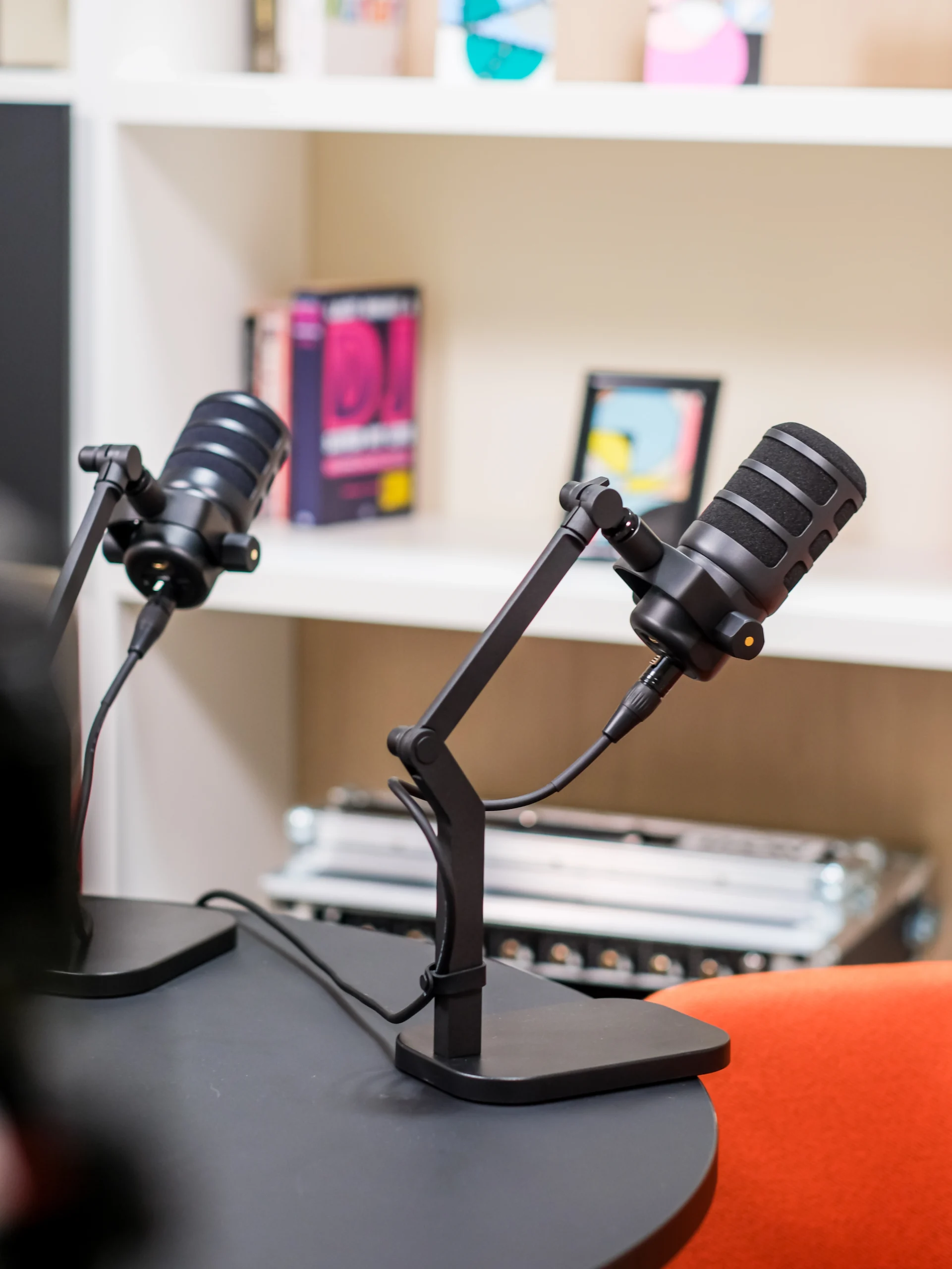
A professional podcast room is a space designed for recording audio and video content, equipped with acoustic treatment, dedicated equipment (microphones, cameras and lighting) and, in most cases, technical support during the session. When the same space can also be used for video production, webinars or photo shoots, it is referred to as a media room: a term that describes the room’s versatility rather than a function separate from podcasting.
Why it matters for content creators in Milan
For a company investing in a branded podcast, recording quality directly affects brand perception: noisy audio or video with inconsistent lighting communicates less care than the content deserves, regardless of the value of the message. For a professional using a podcast to build positioning in their field, consistent quality from one episode to the next is part of the credibility the format develops over time. For an independent creator, a fully equipped studio reduces the time spent on technical production and leaves more room to focus on content.
Market context: how important podcasts are in Italy today
According to the Ipsos report Digital Audio Survey 2024, Unlocking the Potential of Podcasts: From Passion to Strategy, there were 15.2 million podcast listeners in Italy in 2024, up 2% compared with 2023. Of those surveyed, 44% said they were listening to more podcasts than the previous year, rising to 53% among people under 25. Meanwhile, 63% of listeners had listened to at least one branded podcast—audio content produced and sponsored by a brand.
Over the same period, the video podcast format became increasingly established, distributed both as audio-only content and as video on platforms such as YouTube and Spotify. This trend extends the need for professional production standards beyond audio to video as well, for both creators and companies. These figures refer to the Italian podcast market as a whole, not just the branded podcast segment aimed at companies, and are current as of 2024: they should be read as an indication of market trends, not as a forecast.
What is the difference between recording at home and in a professional podcast room?
A home environment without acoustic treatment introduces reverberation and background noise into the audio track. Hard surfaces, windows and thin walls reflect sound and reduce voice clarity. In post-production, these issues require equalization and noise reduction, which increases editing time and, in some cases, cannot be fully corrected.
When the project also includes a video component, lighting becomes another key variable. Without controlled lighting, color rendering can vary from one shot to another and image detail decreases in low-light conditions, which can affect the perceived authority of the content when it is distributed on YouTube or social media.
The most difficult variable to manage independently is consistency between episodes. An editorial project developed across multiple episodes requires repeatable quality standards: the same audio performance, the same lighting and the same setting. A professional podcast room provides this consistency because the equipment, acoustic setup and, when included, the technician in the room remain the same for every session.
Operational considerations: what to evaluate before booking
Before booking a podcast room, it is worth defining a few key elements of the project: the average length of a session, whether an audio-video technician is included in the price or offered as an additional service, whether video is needed alongside audio, which post-production services are required (editing, mixing, color correction), and which platforms the final content will be distributed on. These factors determine whether it is more convenient to rent the room by the hour or choose a package that includes production, post-production and distribution.
Applied example: the Stella33 podcast room in Santa Giulia (Milan)
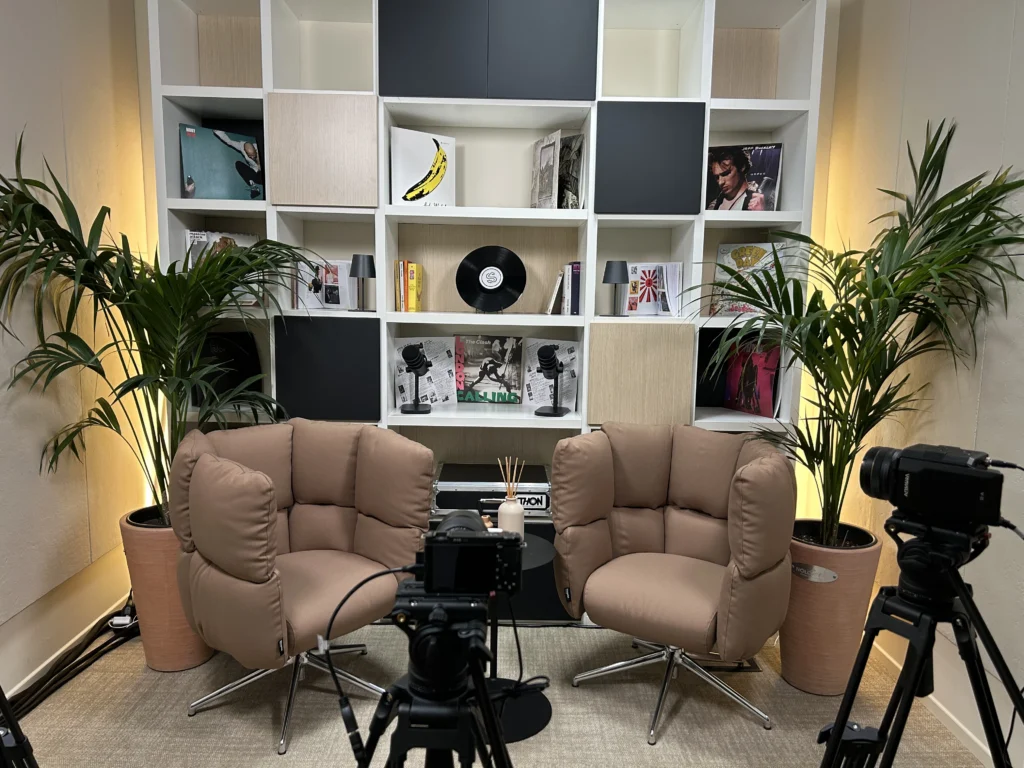
The Stella33 podcast room is located inside Spark3, at Stella Santa Giulia, one of Milan’s innovation hubs. The space is equipped with Røde USB microphones and DJI Mic lavalier microphones, Sony Alpha ZV-E10 4K cameras, professional lighting with LED panels and ring lights, and a modular set suitable for interviews, monologues, conversations or photo shoots. An audio-video technician is present throughout the session.
Podcast room rental starts at €100 per hour, with a technician and audio-video setup always included. For a more complete service, four podcast packages are available, from Basic (recording, production, post-production and distribution) to Luxury (which also includes script development and marketing strategy), as well as an initial consulting service covering market analysis, positioning and format development.
Frequently Asked Questions
What is a professional podcast room?
It is a space equipped with dedicated audio and video equipment (microphones, cameras, lighting and set design) and on-site technical support, designed for recording podcasts, video podcasts and multimedia content with consistent quality standards.
How much does it cost to rent a podcast room in Milan?
The cost varies depending on the session length and the services required. At Stella33’s podcast room, rental with a technician and audio-video setup included starts at €100 for one hour, while complete packages including recording, production, post-production and distribution start at €500 per episode.
Do you need experience to record in a podcast room?
No. Those with no prior experience can rely on the technician present in the studio and, if needed, on an editorial consulting service to define the concept, format and strategy before recording.
What is the difference between a podcast room and a media room?
A podcast room is designed primarily for audio recording. A media room, like Stella33’s, also supports video production, webinars and photo shoots in the same space, expanding the range of possible uses.
Would you like to see Stella33’s podcast room in person? Book a visit to Stella Santa Giulia or email mediaroom@stella33.com for a personalized quote.