
Office space planning is a crucial component in ensuring a productive and comfortable working environment. Adequate space not only improves employee wellbeing, but also contributes to the operational efficiency of the company.
But how can you determine how much space each person needs in the office? In this article, we will explore the key factors to consider and provide a practical guide to calculating the ideal space for your team.
1. Understanding Office Space Regulations
Before you begin calculating the space you need, it is important to be aware of local regulations and industry guidelines. In many countries, there are regulations that establish a minimum amount of space per employee, often measured in square metres. For example, in some European countries, the recommended minimum space can range between 6 and 10 square metres per person. Complying with these regulations is essential not only for legal compliance, but also to ensure the health and safety of employees.
2. Assessing the Type of Work and Specific Requirements
Every office has different needs based on the type of work carried out. Open-plan workspaces, for example, can accommodate more people in a smaller area compared to private offices, but may require more space for meeting rooms or collaboration areas. Companies that operate a hybrid working model or that promote remote working may need less dedicated space for fixed desks. It is important to understand the type of work being done and how the space is used in order to optimise the office layout.

3. Calculating Space for Common Areas
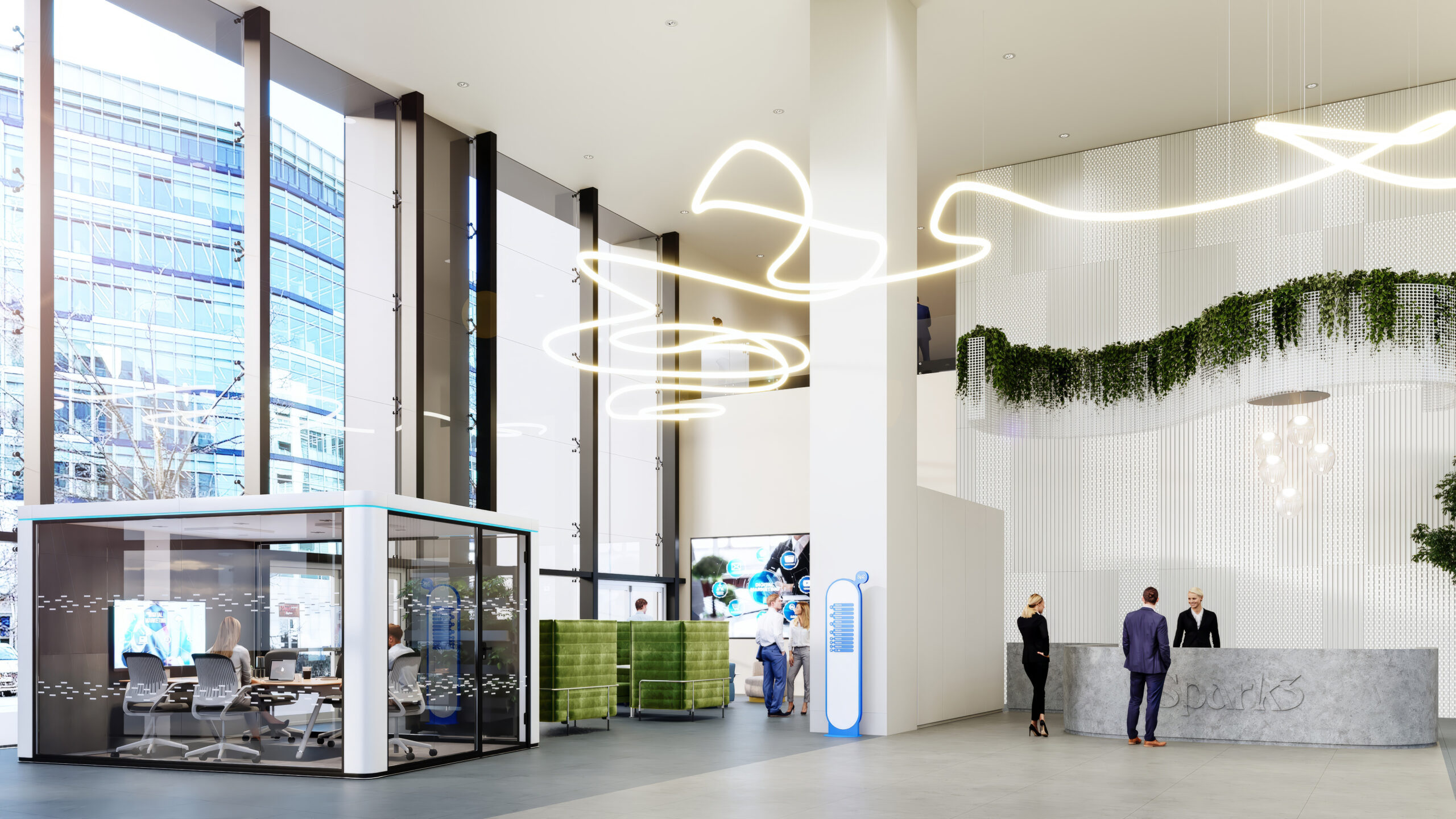
In addition to desk space, it is also necessary to take into account common and support areas, such as meeting rooms, breakout areas, kitchens, and video conferencing rooms. A well-designed office should provide sufficient space for these areas in order to promote collaboration and wellbeing. A general rule of thumb is to allocate approximately 25–30% of the total office space to these common areas.

4. Don't Forget Social Distancing and Safety
With the advent of the COVID-19 pandemic, social distancing has become a crucial factor in office design. Companies must consider how to maintain a safe distance between workstations and ensure clear pathways for movement within the office. This may require more space per employee than was previously necessary. A good practice is to allow for at least 2 metres of distance between workstations in order to ensure safety.
5. Using Space Planning Software
Today there are several software tools available that can help plan and optimise the use of office space. These tools allow you to simulate different layouts, taking into account the specific needs of the company and its employees. Using space planning software can help you visualise how the space will be used and make adjustments before committing to significant renovation or rental costs.
6. Conducting a Growth Forecast Analysis
Furthermore, it is essential to take into account your company’s growth forecasts. Planning only for current needs could lead to a rapid saturation of space, forcing you to look for new office premises sooner than expected. Allowing a margin of space for future growth and scalability can ensure greater flexibility and reduce the need for costly relocations or expansions down the line.

7. Considering Activity Based Working and Flexible Offices
An increasingly popular approach in office space design is the so-called Activity Based Working (ABW) model. This model involves designing the office with different functional areas, each conceived to support specific work activities, such as focusing on individual tasks, collaborating in groups, or taking part in meetings. Flexible offices are ideal for implementing an ABW approach, as they offer the ability to quickly modify the layout and distribution of spaces in line with the evolving needs of the company and its employees.
With ABW, people are not assigned to a single desk, but can choose the space best suited to the activities they need to carry out throughout the day. This not only optimises the use of space by reducing the need for fixed workstations, but also promotes greater autonomy and flexibility, improving employee productivity and satisfaction. By integrating Activity Based Working into flexible offices, companies can create a dynamic and adaptable working environment, capable of evolving alongside the needs of the team and the market.
Conclusions
Calculating the space required for each person in the office demands a thorough understanding of the company’s needs, local regulations, and best design practices. By taking into account factors such as the type of work, common areas, safety, and growth forecasts, it is possible to create a working environment that is both functional and welcoming. A flexible approach, such as that offered by Activity Based Working, allows for further optimisation of space usage, dynamically adapting to the diverse needs of employees.
This vision is perfectly aligned with the values and ideals of Stella33: we are committed to creating flexible and dynamic workspaces that promote not only operational efficiency, but also the wellbeing and satisfaction of employees.. Through innovative and flexible solutions, such as Activity Based Working, shared common areas designed to optimise interaction and networking even among employees from different companies, Stella33 supports businesses in building working environments that reflect an inclusive, sustainable and future-oriented culture, ensuring that every space is designed to harmoniously adapt to the ever-evolving needs of both people and organisations.