
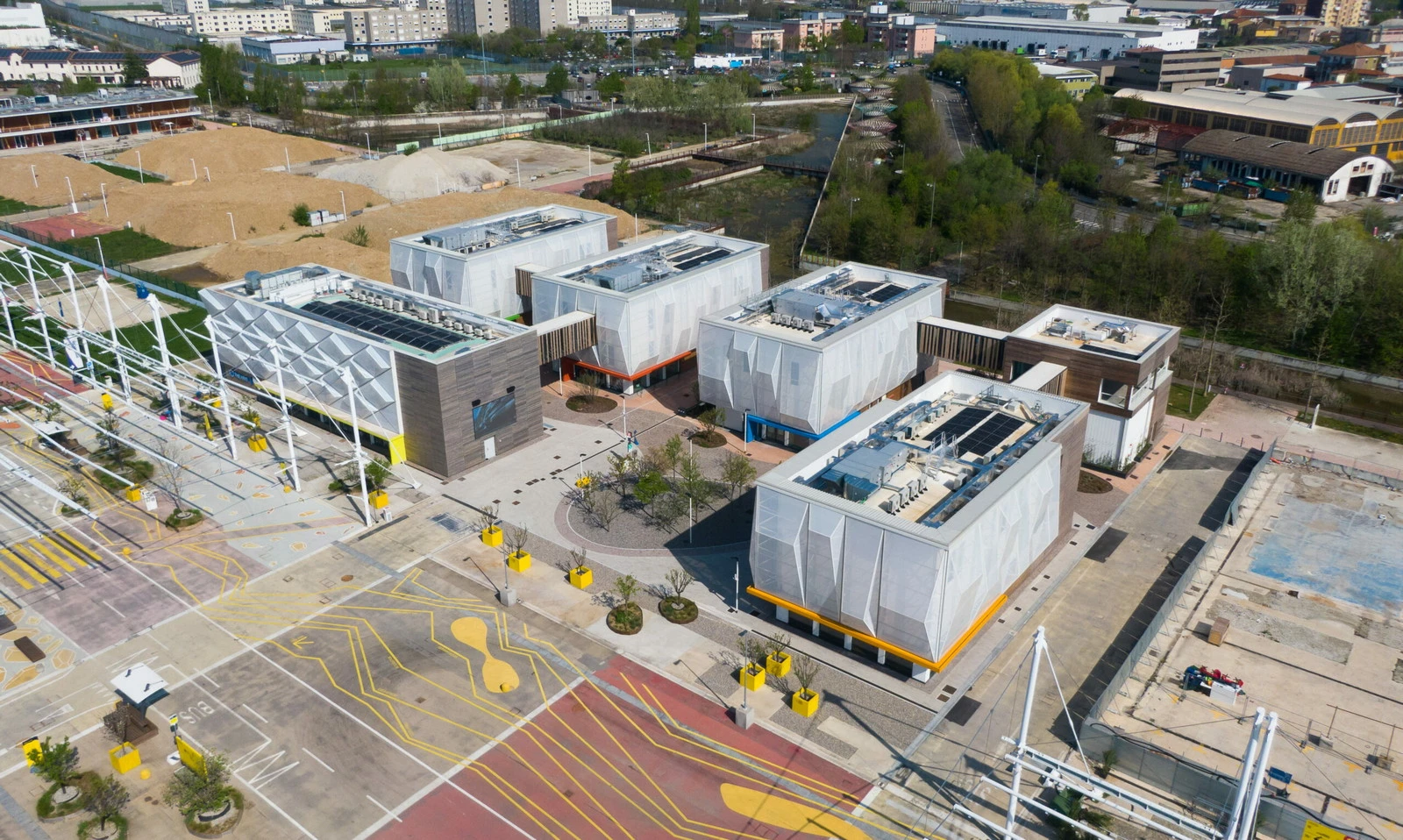
Corporate real estate leaders in Milan face mounting pressure to reduce costs, increase flexibility, and adapt to evolving employee expectations. Traditional large headquarters with long-term leases are increasingly viewed as inflexible and expensive in a world where hybrid work has become the norm. Organizations are actively seeking flexible hybrid workspace solutions in Milan that optimize space utilization while maintaining, or improving, productivity and employee experience.
In 2026, The Hive in the MIND Innovation District and Stella Santa Giulia in the Spark Business District are playing an important role in enterprise real estate strategies. These locations enable companies to implement agile, future-proof hybrid models that reduce risk and support long-term organizational goals.
The Evolving Corporate Real Estate Landscape in Milan
Many enterprises have already reduced their central Milan office footprints by 30-50% compared to pre-pandemic levels. However, simply downsizing is no longer sufficient. Companies need solutions that provide professional presence, scalability, and geographic coverage across the metropolitan area. Fixed long-term leases carry significant financial and operational risk if business conditions change or hybrid policies evolve further.
Flexible workspaces in innovation districts offer a strategic alternative. They combine modern infrastructure with short-to-medium term agreements, allowing real estate teams to align workspace costs more closely with actual business needs and workforce distribution.

The Hive at MIND: Strategic Location for Innovation and Technical Functions
Milano Innovation District in northwest Milan has become a preferred choice for corporate innovation centers, digital labs, and technology-driven departments. The Hive offers scalable private suites, dedicated team floors, and flexible collaborative spaces designed for enterprise requirements.
The district’s strong transport infrastructure supports employees across northern and western Milan, helping companies reduce overall commuting times and associated costs. Enterprises can use this location for specialized teams that benefit from proximity to research institutions and innovation networks while maintaining the flexibility to adjust capacity as projects and priorities shift.
This setup allows real estate leaders to test new hybrid configurations with lower risk. Monthly all-inclusive costs for corporate teams typically range from €450 to €720 per person, providing cost predictability and eliminating many hidden expenses associated with traditional offices.
Stella Santa Giulia in the Spark Business District: Versatile Option for Enterprise-Wide Hybrid Needs
Stella Santa Giulia is positioned in the Spark Business District within the Santa Giulia regeneration area in southeast Milan. The location features excellent connectivity through the Rogoredo transport hub, serving employees across southern and eastern Milan effectively.
The workspace supports a wide range of corporate functions, including sales, marketing, operations, finance, and HR teams. Its modern design and balanced environment make it suitable for both daily hybrid operations and occasional larger team gatherings. The ongoing development of the district ensures long-term relevance and increasing amenities for employees.
This location is particularly valuable for enterprises seeking geographic diversification in their real estate portfolio. It enables companies to maintain a professional presence in southeast Milan without committing to large fixed-cost facilities. Monthly pricing for enterprise hybrid teams generally falls between €450 and €710 per person.
Building a Resilient Multi-Hub Real Estate Strategy
Forward-thinking enterprises are moving toward multi-hub models that combine a smaller core presence in central Milan with satellite locations in innovation districts. This approach delivers several strategic benefits:
- Reduced overall real estate costs and improved space utilization
- Better coverage across employee residential areas
- Greater agility to scale or contract workspace as business needs change
- Enhanced ability to attract and retain talent through convenient locations
- Lower risk compared to single large headquarters
Long-Term Advantages in a Changing Business Environment
In 2026, corporate real estate strategy must account for continued hybrid work adoption, potential economic fluctuations, and evolving employee preferences. Flexible solutions in innovation districts provide the adaptability required to navigate these uncertainties. Organizations can adjust capacity quickly, test new working models, and make data-driven decisions based on actual utilization rather than forecasts.
Both locations feature modern, well-maintained buildings that support long-term operational efficiency and employee satisfaction. This contributes to stronger employer branding and talent retention, increasingly important factors in corporate real estate decisions.
Practical Steps for Real Estate and Workplace Teams
Enterprise teams should begin by conducting thorough utilization studies and employee commute mapping. Analyzing department-specific needs helps determine the optimal mix of locations. Pilot programs at The Hive and Stella Santa Giulia provide concrete data on productivity, collaboration effectiveness, and cost savings before full implementation.
Collaboration between Real Estate, HR, Finance, and Sustainability departments ensures alignment across multiple objectives. Regular reviews of workspace performance allow continuous optimization as hybrid policies mature.
Milan’s innovation districts are expected to see continued development and improved connectivity in the coming years. Enterprises that establish strategic presence now will be well-positioned to benefit from these advancements while maintaining the flexibility essential for future success.
How can flexible workspaces help future-proof corporate real estate strategy?
They provide scalability, shorter commitment periods, and geographic flexibility, allowing companies to adapt quickly to changing business conditions and workforce preferences.
What is the typical cost advantage compared to traditional offices?
All-inclusive flexible solutions in these districts often deliver 25-45% lower total occupancy costs than equivalent traditional leases when factoring in utilization rates, deposits, and maintenance.
Can startups use both The Hive and Stella Santa Giulia at the same time?
Yes. Many early-stage companies maintain a small presence in both locations to cover different team needs and geographic distribution. Consistent service standards across both sites make this arrangement straightforward.
Can large enterprises effectively operate across both districts?
Yes. Many organizations run successful multi-hub strategies, assigning different functions or employee clusters to each location for optimal coverage and efficiency.
Have we sparked your interest and would you like to receive more information? Please fill out the form.